REGISTERED PORTFOLIO MANAGER · ONTARIO SECURITIES COMMISSION · SINCE 2006
Reclaim Your Confidence: An Investment Firm That Shows Its Work
We manage $340 million the same way we'd want our own money managed: with every fee disclosed, every trade explained, and every mistake published.
Established in 2006 in Ottawa. Registered Portfolio Manager with the Ontario Securities Commission. Registration No. PM-2006-0847.
Open-book portfolio management for individuals, corporations, and institutions across Ontario, Quebec, and the Maritimes.
Uncover Our Story: A Kitchen-Table Argument That Built a Firm
In 2006, Marc Burnaby and Lilian "Lily" Burnaby launched Burnabilly Investments from a rented office above a sandwich shop on Elgin Street in Ottawa. Marc had spent eleven years as a portfolio analyst at the Ontario Teachers' Pension Plan, where he managed sub-portfolios within one of the largest institutional investors in the country. He'd watched the pension plan's internal research process up close — rigorous, evidence-based, and transparent to its board — and he couldn't understand why nothing like it existed for individual investors. Lily was a civil engineer who'd built financial models to evaluate multi-decade capital expenditure plans for Public Works. She spent her career quantifying risk on bridge rehabilitations and water treatment facilities — projects where getting the math wrong has real consequences.
The name "Burnabilly" is a portmanteau their kids invented — a mashup of "Burnaby" and "Lily." It stuck because it sounded like nothing else in Canadian finance. That was the point. Marc and Lily wanted a name that felt human and a little unusual, not another "Capital Partners" or "Wealth Advisory Group" that blended into a sea of blue-suited anonymity.
The firm started because Marc and Lily kept having the same argument at their kitchen table. Marc thought most investment firms obscured their reasoning to maintain an air of mystique — that opacity was a feature, not a bug, because it discouraged clients from asking hard questions. Lily, trained in engineering where you show every calculation and every assumption is documented for peer review, thought that was absurd. Why would you hide the math from the person whose money is at stake? If a structural engineer can explain load-bearing calculations to a municipal council, a portfolio manager should be able to explain a sector allocation to the person paying for it.
That argument became the operating philosophy. From day one, Burnabilly published its investment process documentation, fee breakdowns, and quarterly post-mortems — including trades that lost money and why. Their first clients were Ottawa small business owners and federal government employees who found the firm through word of mouth, attracted by plain-language quarterly reports that read like engineering memos, not marketing brochures. By 2010: $28 million under management. Today: $340 million. The philosophy hasn't changed. The sandwich shop is now a ramen place, but the office is still on the same block of Elgin Street.

Navigate Our Process: Five Steps from Handshake to Open Book
Wondering what actually happens after you reach out? Here's the entire process — the same sequence every client goes through, without exception. No mystery, no hidden stages, no shortcuts for larger accounts.
The Conversation
No pitch deck. No glossy brochure. We sit down — in person at our Ottawa office, or over a video call — listen to your situation, answer your questions, and figure out if we're the right fit. We'll ask about your financial goals, your timeline, your tolerance for volatility, and what's frustrated you about previous advisory relationships. About half of initial conversations end with us recommending someone else, whether that's a fee-only financial planner, a specialized tax advisor, or simply a different portfolio management style. We're a team of six — we'd rather work with fewer clients well than many clients badly.
The Fee Audit
Whether or not you become a client, we review your current holdings and calculate your total all-in costs — management expense ratios, trading commissions, advisory fees, deferred sales charges, trailing commissions, and any other charges embedded in your portfolio. This document is yours to keep. It typically reveals $15,000 to $90,000 in annual costs that were never presented as a single number. Most people are genuinely surprised. Our complimentary fee audit has reviewed over 200 prospective client portfolios since we started offering it, and roughly 60% of the people who receive one don't become clients. That's fine — the point is that you should know what you're paying, regardless of who manages your money.
The Investment Policy Statement
Your IPS is the constitution of your portfolio. It defines return objectives in real after-tax terms, risk parameters calibrated to your actual capacity for loss (not a five-question risk tolerance quiz), asset class constraints, rebalancing rules, liquidity requirements, tax considerations, and the benchmarks we'll measure ourselves against. We build it together — nothing is decided behind closed doors. The IPS is a living document: it gets reviewed annually, or whenever your circumstances change materially. Every trade we make must be justifiable under your IPS, and we'll show you exactly how it fits. Learn more about our investment strategies that inform this process.
Portfolio Construction & Implementation
We build your portfolio from individual stocks, bonds, and low-cost ETFs. No proprietary funds. No wrap accounts. No revenue-sharing arrangements with product manufacturers. Every position is tied to your IPS and supported by our internal research, which covers approximately 180 Canadian and U.S. securities. Every trade generates a next-day notification with the rationale attached — not a cryptic confirmation number, but a plain-language explanation of why we bought or sold, what thesis supports the decision, and how it affects your portfolio's risk profile. Client assets are held at CIBC Mellon, a qualified third-party custodian, so your money is never in our hands.
Open Book Reporting
Quarterly reports include gross and net performance, benchmark comparison against relevant indices, individual security commentary, all trades with rationale, a risk summary with updated stress-test scenarios, and the "What Went Wrong" section — our detailed post-mortem on positions that underperformed and what we learned. We've published this section for 76 consecutive quarters since Q1 2007. You also get real-time access to the Open Book portal — our internal research notes, your current holdings with live valuations, transaction history, and our market outlook. See our performance track record to understand what this reporting looks like in practice.
Trace Our Path: Twenty Years of Showing the Math
From a rented office above an Elgin Street sandwich shop to $340 million under management — here's every milestone, in order. No revisionist history.
Understand Our Principles: Five Rules We Don't Break
These aren't aspirational values on a poster. They're operational constraints — built into our compliance framework, our reporting templates, and our client agreements. Every member of our team can recite them from memory because they govern daily decisions.
Show the Math
Every recommendation comes with the full reasoning. Clients receive the same internal research documents the investment committee uses — the same sector analysis, the same valuation models, the same risk assessments. We don't produce a "client version" that omits the hard parts. If Priya's research note says a position carries concentration risk, you see that language. If Marc disagrees with a consensus view, you read his argument. Access it all through the Open Book portal.
Admit the Losses
Every quarter, we publish a detailed post-mortem on positions that underperformed — what our thesis was, where it went wrong, and what we've changed as a result. Hiding mistakes guarantees you repeat them. In 76 consecutive quarterly reports, we've documented every material loss: the 2015 energy overweight, the 2020 hospitality misjudgement, the 2022 duration call that was six months early. Our performance page shows the track record, warts and all.
Charge What You Charge, and Say It Plainly
Our fee schedule is on the website, to the basis point. No bundled fees that obscure what goes to the advisor versus the fund company. No soft-dollar arrangements where trading commissions subsidise research subscriptions. No trailer commissions from mutual fund manufacturers. Your fee audit — which we provide free to every prospective client — compares your current all-in cost against what you'd pay with us, line by line. Typical savings: $31,000 per year.
Engineer the Downside First
Before asking "how much can this make?" we ask "what does this cost us if we're wrong?" Every portfolio is stress-tested before implementation — against historical drawdown scenarios (2008 financial crisis, 2020 COVID crash, 2022 rate shock), hypothetical events (commodity collapse, Canadian housing correction, simultaneous equity and bond decline), and correlation breakdowns that expose hidden concentration risk. Our investment strategies are built from the downside up. If the worst case is unacceptable, the position doesn't enter the portfolio.
Speak Like a Human
Financial jargon is a barrier, not a credential. If a concept requires technical terminology, it's defined in the document, every time — no assumptions about what you already know. Our quarterly reports, research notes, and market commentary are written to be understood by someone who is intelligent but not a finance professional. Lily insists on this: "If I could explain soil liquefaction risk to a town council, Marc can explain sector rotation to a dentist."
The People Behind the Portfolio
We're six people. That's it. No layers of junior staff between you and the person managing your money. No call centre, no "relationship manager" who relays your questions to someone you've never met. Here's who you'll actually work with — though we'd encourage you to visit the full team page for their complete backgrounds, credentials, and some personal details they may regret sharing.

Marc Burnaby, CFA
Co-Founder & Chief Investment Officer
Former Ontario Teachers' Pension Plan analyst. Leads investment committee decisions and portfolio strategy. 30+ years in Canadian capital markets.
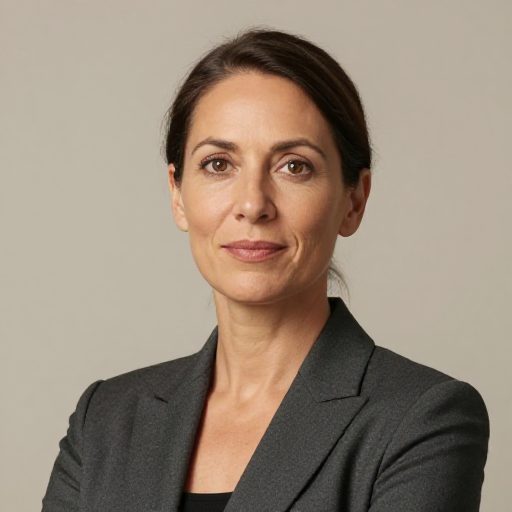
Lilian (Lily) Burnaby, P.Eng., CFA
Co-Founder & Managing Director
Civil engineer turned portfolio manager. Oversees firm operations, compliance standards, and the risk engineering framework she adapted from infrastructure analysis.
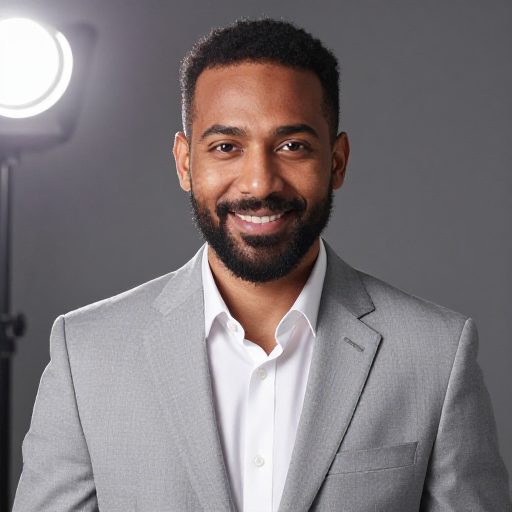
Derek Fonseca, CFA, CIM
Senior Portfolio Manager
Joined from RBC Dominion Securities in 2012. Primary portfolio manager for high-net-worth and corporate accounts. Fully bilingual in English and French.

Priya Chandrasekaran, CPA, CFA
Director of Research & Analytics
Leads the firm's proprietary research framework covering ~180 Canadian and U.S. securities. Built quantitative stress-testing models adapted from actuarial science.
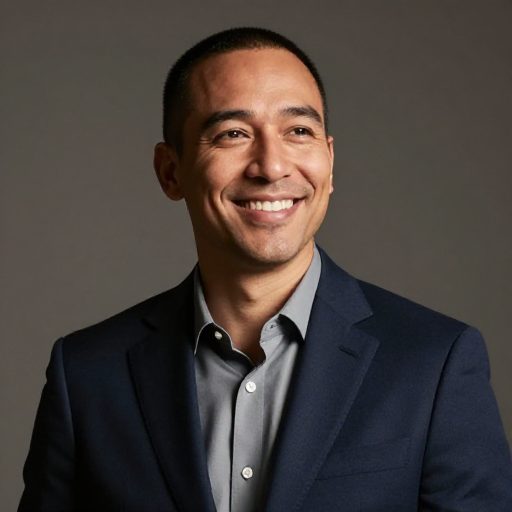
Jean-Luc Garnier, CFP®
Client Relations Manager
Your day-to-day point of contact. Manages onboarding, the complimentary fee audit process, and quarterly review scheduling. Joined in 2017.
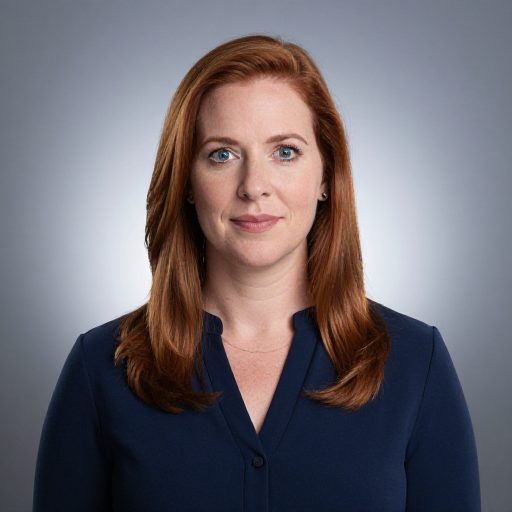
Saoirse Doherty
Operations & Compliance Manager
Oversees regulatory compliance, trade execution quality, and the annual internal audit programme. Joined in 2019 and built the firm's compliance documentation from the ground up.
Curious How We'd Manage Your Money?
Our fee audit is complimentary and obligation-free. We'll review your current holdings, calculate your all-in costs line by line, and hand you the report — a document that's yours to keep whether or not you become a client. About 60% of people who get the audit don't become clients, and that's fine. The goal is to make sure you know exactly what you're paying, no matter who manages your portfolio.
Or call us directly at (807) 876-1862. We respond within one business day.